Carbon-neutral travel tips offer a pathway to exploring the world responsibly. This guide delves into practical strategies for minimizing your environmental impact while traveling, from choosing sustainable transportation and accommodations to making conscious decisions about activities and consumption. We’ll explore how to calculate your carbon footprint, offset emissions effectively, and plan unforgettable trips that leave a lighter footprint on the planet.
By understanding the environmental implications of different travel choices and embracing eco-conscious practices, you can significantly reduce your carbon emissions and contribute to a more sustainable future for tourism. This guide provides a comprehensive roadmap for planning and executing carbon-neutral trips, empowering you to travel the world while minimizing your impact.
Planning a Carbon-Neutral Trip: Carbon-neutral Travel Tips
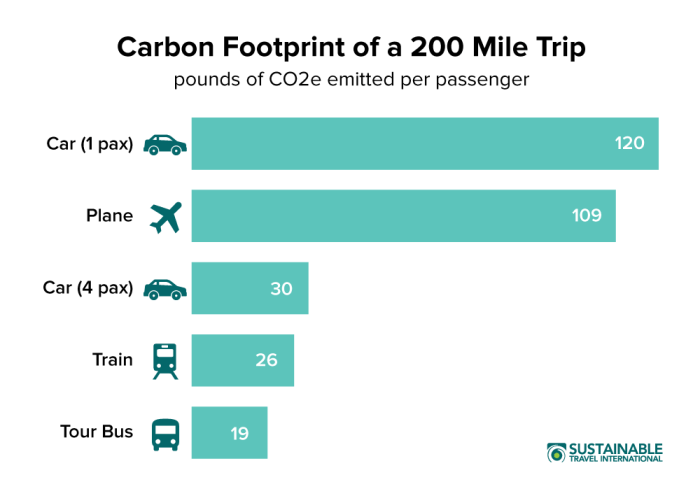
Planning a carbon-neutral trip requires careful consideration of various factors throughout the journey, from initial research to post-trip reflection. Minimizing your environmental impact involves making conscious choices at every stage, from transportation and accommodation to activities and consumption. By following a structured approach, you can significantly reduce your carbon footprint and enjoy a more sustainable travel experience.
Pre-Trip Planning for Carbon-Neutral Travel
Before embarking on your trip, thorough planning is crucial for minimizing your environmental impact. This involves researching sustainable travel options, calculating your estimated carbon footprint, and exploring offsetting strategies.
- Destination Selection: Choosing a closer destination significantly reduces travel emissions. Consider destinations within your region or country to minimize flight distances. For example, instead of flying to Bali, explore a closer coastal region offering similar experiences.
- Transportation: Opt for low-carbon transportation methods whenever possible. Train travel often has a much smaller carbon footprint than air travel. For shorter distances, consider buses or carpooling. If flying is unavoidable, explore carbon offsetting programs.
- Accommodation: Choose eco-friendly accommodations such as hotels with sustainable practices, eco-lodges, or homestays that prioritize energy efficiency and waste reduction. Look for certifications like LEED or Green Globe.
- Activities: Research activities that minimize environmental impact. Choose walking tours, cycling excursions, or public transportation over activities involving private vehicles or motorized transport. Prioritize experiences that support local communities and ecosystems.
- Carbon Footprint Calculation: Utilize online carbon footprint calculators to estimate the emissions associated with your planned trip. Many websites provide detailed breakdowns based on transportation, accommodation, and activities. Inputting your travel details provides an estimate that can then be used for offsetting.
On-Site Practices for Minimizing Carbon Footprint
Once you’ve arrived at your destination, continue practicing sustainable habits to minimize your environmental impact throughout your trip.
- Reduce, Reuse, Recycle: Follow the local guidelines for waste management, reducing your consumption and reusing items whenever possible. Minimize single-use plastics and properly dispose of waste according to local regulations.
- Conserve Water and Energy: Be mindful of your water and energy consumption. Turn off lights and appliances when leaving your room, and take shorter showers to conserve water.
- Support Local Businesses: Patronize local businesses and markets that prioritize sustainable practices. This helps support local economies and reduces the environmental impact associated with large corporations.
- Respect Local Culture and Environment: Be mindful of your impact on the local environment and culture. Avoid disturbing wildlife, follow trail etiquette, and respect local customs and traditions.
Sustainable Travel Guides and Resources
Several organizations and websites offer valuable resources and guidance for planning sustainable trips.
- Sustainable Travel International: Provides information on sustainable travel practices and certifications.
- Green Globe: Offers a certification program for sustainable tourism businesses.
- Travelife: Provides training and certification for tourism businesses committed to sustainability.
- Numerous online carbon footprint calculators: Many websites offer free carbon footprint calculators to help you estimate the emissions associated with your trip. These often provide recommendations for offsetting your impact.
Calculating and Offsetting Your Carbon Footprint, Carbon-neutral travel tips
Calculating and offsetting your carbon footprint involves estimating your trip’s emissions and investing in projects that reduce greenhouse gas emissions elsewhere.
Many online calculators provide detailed breakdowns of your carbon emissions based on the various aspects of your trip (transportation, accommodation, activities, etc.). After calculating your total carbon footprint, you can choose to offset your emissions by investing in verified carbon offset projects. These projects typically focus on renewable energy, reforestation, or other initiatives that reduce greenhouse gas emissions.
The formula for calculating carbon footprint is not a single, universally accepted equation, but rather a summation of emissions from various sources. It generally involves multiplying the amount of each emission source (e.g., miles driven, kilowatt-hours of electricity used) by its associated emission factor (e.g., grams of CO2 per mile driven). The results are then summed to obtain a total carbon footprint.
Exploring Eco-Tourism Destinations
Eco-tourism offers a responsible and rewarding way to travel, allowing you to experience the beauty of our planet while minimizing your environmental impact. These destinations prioritize conservation, community involvement, and sustainable practices, providing a unique and enriching travel experience that benefits both the traveler and the environment. They often feature stunning natural landscapes and opportunities for wildlife viewing and adventure activities.Eco-tourism destinations are characterized by their commitment to environmental sustainability and the well-being of local communities.
National Parks, for instance, typically implement strict regulations to protect fragile ecosystems, offering guided tours and educational programs to raise awareness about conservation efforts. Forest adventure sites might focus on sustainable logging practices and responsible ecotourism initiatives, providing opportunities for activities like zip-lining or canopy walks with minimal environmental disturbance. Marine life adventure sites, such as coral reefs or whale-watching locations, often prioritize responsible boating practices and promote education about marine conservation to prevent damage to delicate ecosystems and protect endangered species.
Characteristics of Eco-Tourism Destinations
National Parks, Forest Adventure sites, and Marine Life Adventure sites share common characteristics that define them as eco-tourism destinations. They are typically located in areas of significant natural beauty and biodiversity, and they prioritize conservation efforts through responsible management practices. This includes minimizing environmental impact, protecting wildlife habitats, and engaging local communities in conservation initiatives. The activities offered in these destinations are designed to minimize disturbance to the environment and often include educational components that raise awareness about the importance of environmental protection.
Examples include guided hikes with nature interpretation, sustainable wildlife viewing tours, and educational programs on local flora and fauna. Furthermore, many eco-tourism destinations prioritize community involvement, ensuring that local communities benefit economically and socially from tourism.
Comparing and Contrasting Eco-Tourism Destinations
The sustainability practices of eco-tourism destinations vary significantly. Some destinations may have more robust certification programs and stricter regulations than others. For example, a national park with a long-standing history of conservation might have stricter guidelines for visitor access and waste management compared to a newer eco-tourism venture in a developing country. A comparison could be made between a well-established national park in Costa Rica, known for its strong environmental regulations and community involvement programs, and a newly developed ecotourism site in the Amazon rainforest, which may still be developing its sustainable practices.
The Costa Rican park might have a more developed infrastructure for waste management and visitor education, while the Amazon site might be focusing on community development and responsible resource management. Both, however, aim for environmentally friendly practices.
Finding and Booking Sustainable Tour Operators
Finding and booking sustainable tour operators requires careful research. Look for operators with certifications from reputable organizations, such as the Global Sustainable Tourism Council (GSTC), which provides a framework for sustainable tourism practices. Read reviews from other travelers to assess the operator’s commitment to sustainability. Look for operators that actively support local communities, engage in conservation efforts, and minimize their environmental impact.
Websites and online platforms dedicated to sustainable travel can be invaluable resources for finding reputable operators. These platforms often allow you to filter your search based on specific criteria, such as certification, location, and activity type, helping you find operators that align with your values and travel preferences. Checking for transparent pricing structures, which clearly detail how much goes back to the local community and conservation efforts, is also crucial.
Visualizing Sustainable Travel
Sustainable travel isn’t just about reducing your carbon footprint; it’s about experiencing the world in a way that respects its beauty and preserves it for future generations. Visualizing these experiences can inspire us to make more conscious choices and embrace a more mindful approach to travel. The following descriptions aim to paint a picture of sustainable travel in action.
Images can powerfully convey the essence of responsible tourism. They can showcase the joy of gentle exploration and the beauty of preserving our planet’s natural wonders. Let’s explore some examples.
Sustainable Travel Imagery
A vibrant image comes to mind: a family of four, smiles beaming, cycles effortlessly along a winding path through a sun-dappled national park. Lush greenery surrounds them, the air alive with the chirping of birds. Their bikes, perhaps slightly worn but well-maintained, are a testament to their commitment to low-impact travel. The family is dressed in comfortable, practical clothing, showcasing a sense of ease and connection with nature.
They’re not racing; they’re savoring the journey, pausing to take in the breathtaking vistas and sharing quiet moments of connection. This image perfectly encapsulates the spirit of slow travel and mindful exploration.Another compelling image depicts a couple enjoying a candlelit dinner on a secluded veranda overlooking a rainforest. Their eco-lodge, built with locally sourced, sustainable materials, blends seamlessly into its surroundings.
The warm glow of the candlelight illuminates their faces, reflecting the serenity of their experience. The food, locally sourced and prepared, emphasizes the connection between the couple, the lodge, and the local community. The absence of excessive lighting or noise further underscores the commitment to minimizing environmental impact.Finally, a powerful image shows a group of volunteers, armed with gloves and trash bags, diligently cleaning a pristine beach.
The sun shines brightly, illuminating the clear turquoise water and the pristine white sand. The volunteers, a diverse group of people from various backgrounds, work together with focused determination, removing debris and restoring the natural beauty of the coastline. Their actions speak volumes about the importance of responsible tourism and the power of collective action in protecting our planet.
Forest Adventures: Sustainable Practices
Imagine yourself trekking through a dense rainforest, the air thick with the scent of damp earth and exotic flowers. The sunlight filters through the canopy, creating dappled patterns on the forest floor. Your guide, a member of the local community, points out the medicinal properties of various plants and shares stories of the forest’s history and cultural significance.
You’re traveling on well-maintained trails, minimizing your impact on the delicate ecosystem. You’re observing wildlife from a respectful distance, using binoculars to get a closer look at the vibrant creatures that call this place home. The experience is one of immersion and learning, not exploitation. There’s no littering, no loud noises; just the gentle sounds of nature and the quiet awe of being surrounded by such incredible biodiversity.
Marine Life Adventures: Sustainable Practices
Picture this: you’re snorkeling in crystal-clear waters, surrounded by a kaleidoscope of colorful coral and vibrant marine life. You’re using reef-safe sunscreen, and you’re maintaining a respectful distance from the creatures, ensuring you don’t disturb their natural habitat. Your boat tour operator adheres to strict environmental guidelines, avoiding areas prone to damage and educating passengers about responsible marine practices.
Instead of feeding the fish, which disrupts their natural feeding patterns, you simply observe them in their natural environment. The experience is one of wonder and respect, a testament to the beauty and fragility of the ocean’s ecosystem. You’re leaving the underwater world as you found it – pristine and thriving.
Embarking on carbon-neutral travel is not merely a trend; it’s a responsibility. By consciously choosing sustainable transportation, accommodations, activities, and consumption habits, you actively contribute to preserving our planet’s beauty and resources for future generations. This guide has equipped you with the knowledge and tools to plan and enjoy eco-conscious journeys, making a positive difference with every trip.
Remember, sustainable travel is a journey, not a destination, and every small step counts towards a greener future.
General Inquiries
How can I accurately calculate my travel carbon footprint?
Several online carbon footprint calculators are available. Input details like your mode of transport, distance, accommodation, and activities to get an estimate.
What if I can’t completely offset my carbon footprint?
Even partial offsetting is beneficial. Focus on reducing emissions as much as possible and offsetting the remainder to minimize your overall impact.
Are there any apps that help with sustainable travel planning?
Yes, many apps provide information on eco-friendly accommodations, transportation options, and sustainable activities in various destinations.
How can I support local communities while traveling sustainably?
Choose locally owned businesses, participate in community-based tourism initiatives, and purchase locally sourced products and services.